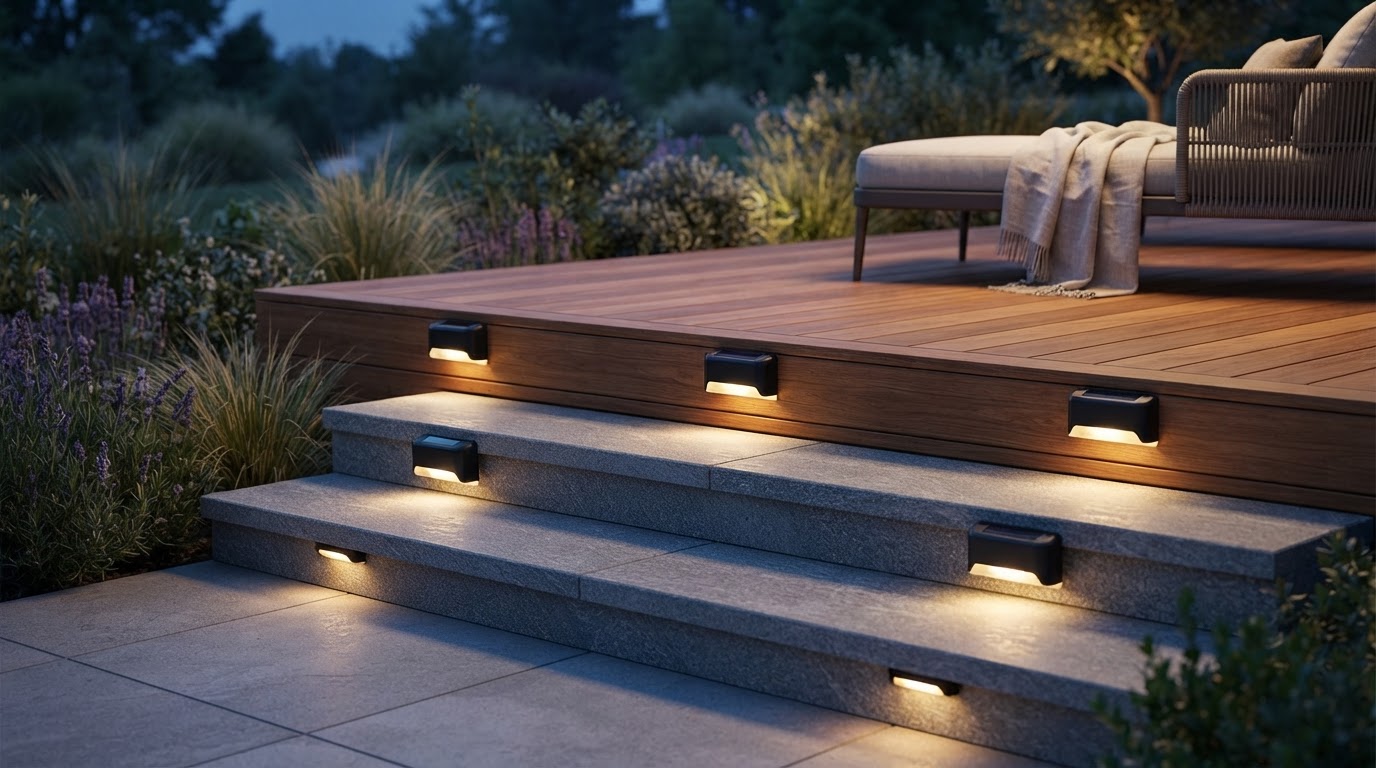
Solar Powered Deck Lights Framework for Modern Yards
 Jordan HaleStaff Writer
October 30, 2026 — The shift toward decentralized home energy is accelerating as homeowners increasingly swap complex electrical grids for independent Solar Powered Deck Lights. The first thing I noticed was the silence of the installation; there was no hum of a trenching machine or the sharp smell of ozone from a transformer being wired into the mains.
While hardwired systems have long been the standard for high-intensity illumination, Lighting Warehouse notes that solar options are significantly better for simple, eco-friendly, or temporary setups because they bypass the technical hurdles of traditional electrical work. The weight of a copper spool for a low-voltage system is a physical reminder of the labor involved, whereas modern solar units feel light, compact, and ready to mount in minutes. However, choosing between the two requires understanding how independence from the grid affects long-term performance, especially as seasons shift.
The Dual-Path Assessment Framework
When evaluating Solar Powered Deck Lights against hardwired alternatives, I focused on the trade-off between absolute consistency and installation freedom. Hardwired systems offer a steady stream of power, but they tether your deck to the home’s electrical bill and a professional electrician's schedule. In contrast, solar units like LED solar stair lights and solar cap lights for deck posts operate on a self-contained cycle. I keep coming back to the simplicity of the waterproof solar fence lights I installed last spring; they required zero conduit and survived three heavy rainstorms without a flicker. It turns out that for most residential decks, the 12,100 impressions of light needed for safety on stairs don't require the massive output of a 120V system. Modern solar units frequently feature IP65 or IP67 weatherproofing, warm white color temperatures, and high-efficiency monocrystalline panels that harvest energy even on overcast days. While hardwired lights stay at 100% brightness until you flip the switch, solar lights offer a gentle, tapering glow that mimics the natural transition from dusk to deep night. This is particularly relevant when considering how do solar powered deck lights work in winter and the specific needs for maintaining solar powered deck lights during dark winters. The choice ultimately hinges on whether you value the surgical precision of a wired grid or the autonomous, set-and-forget nature of solar technology.
Expert tip: If your deck features shaded corners, prioritize solar units with remote panels or high-capacity lithium-ion batteries to ensure they store enough energy during peak sun hours to last through the evening.
Understanding the mechanics of how do solar powered deck lights work in winter is essential for those in northern climates. Proper care, including maintaining solar powered deck lights during dark winters, ensures your investment remains functional year-round despite the shorter days.
Shop Solar Powered Deck Lights.
Sources
- Solar vs. Wired Landscape Lighting | Lighting Warehouse
- Landscape Lighting: Low Voltage vs. Solar - Which is Better? - Blog
- Deck Lighting Options: Solar vs. Wired - Stump's Decks & Porches