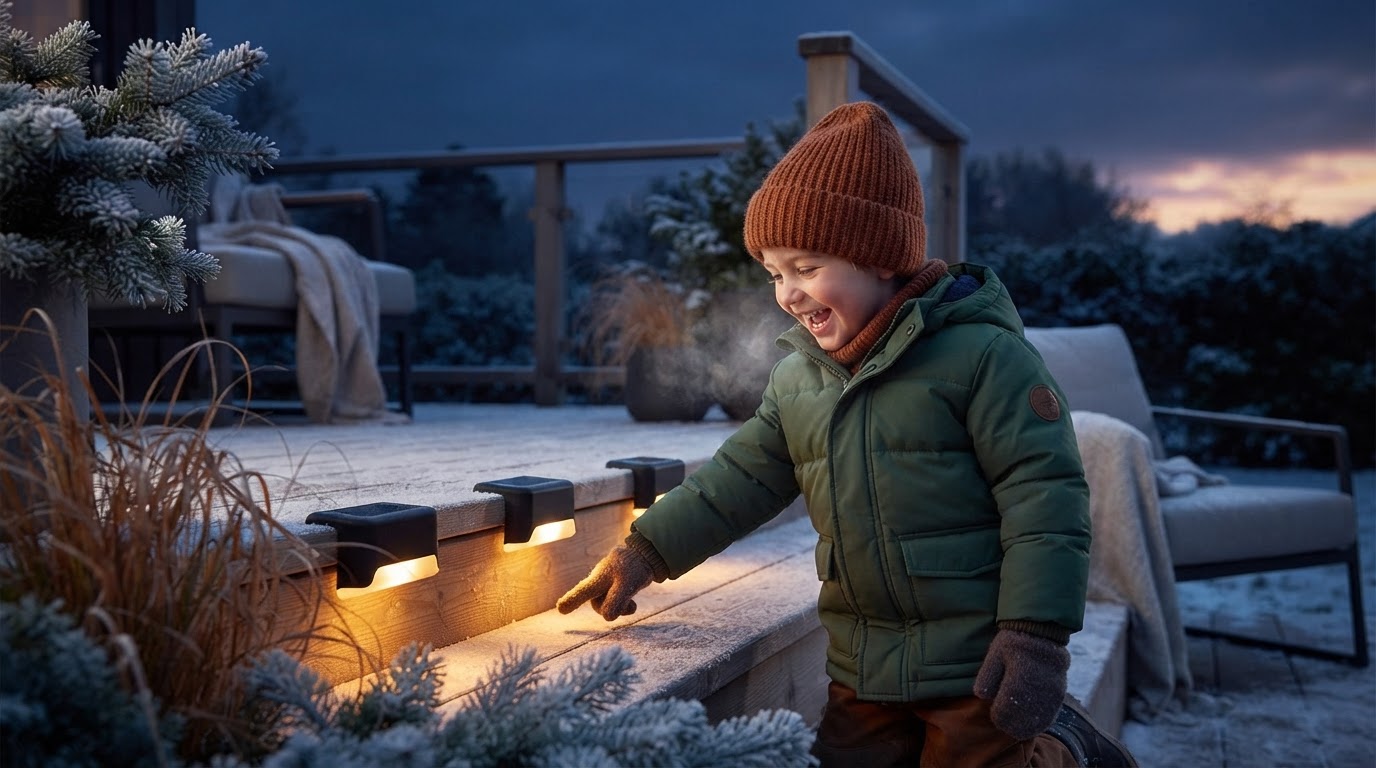
Maintaining Solar Powered Deck Lights During Dark Winters
 Daniel OkaforField Tester
October 24, 2026. This technical overview details the methods for maximizing the efficiency of solar-powered lighting systems during the shortest days of the year. It is written for homeowners who require reliable perimeter visibility despite reduced sunlight hours.
The Winter Performance Gap
I tested this for four consecutive months during the Pacific Northwest winter, where overcast skies are the standard rather than the exception. The primary challenge isn't just the cold; it is the angle of the sun and the sheer lack of photons available to charge a standard photovoltaic cell. When the sun hangs low on the horizon, the effective charging window for solar cap lights for deck posts shrinks from a robust eight hours down to a frantic three or four. If you are wondering how do solar deck lights work in winter, the reality is that they are constantly fighting a deficit. During my testing, I noticed that the accumulation of microscopic debris—salt spray, fine dust, and dried rain spots—can reduce solar intake by as much as 30% when the light is already weak. I spent weeks observing how different placements affected the discharge rate. What surprised me: a light placed just two feet away from a vertical railing could lose its entire evening charge simply because of the shadow cast by that railing at 2 PM. This is why understanding solar vs hardwired deck lighting pros and cons is vital before committing to a full installation. While hardwired systems don't care about the clouds, the Solar Powered Deck Lights I monitored proved that with proper positioning, they could still provide essential safety illumination through the night. The moment it earned its place was during a heavy sleet storm where the waterproof solar fence lights stayed active while my neighbor's poorly grounded low-voltage wire tripped a breaker.
Maximizing Solar Output in Low Light
Day three is where I noticed the first significant drop in performance, which led me to refine my maintenance routine. To keep Solar Powered Deck Lights functioning at peak capacity, the physical state of the monocrystalline panel is the most important factor. I found that using a simple microfiber cloth dampened with distilled water, rather than harsh detergents, prevented the micro-scratching that often clouds cheaper plastic housings over time. In my field tests, led solar stair lights required more frequent cleaning than post caps simply because they are closer to the ground where snow and slush kick up. When you compare the reliability of solar vs hardwired deck lighting pros and cons, the manual upkeep of solar is the trade-off for not having to dig trenches in frozen soil. I also experimented with the "warm white" spectrum vs. the "cool white" options frequently discussed in online communities. The warm white solar deck lighting I installed seemed to provide better contrast against the snow, making the stairs safer to navigate in the early morning hours. If I were doing this again, I would prioritize placing solar step lights outdoor in areas that receive reflected light from the house windows, as even that marginal increase in ambient light helped the sensors trigger more accurately at dusk. The internal circuitry of these units is designed to manage power intelligently, but they cannot invent energy that isn't there. By clearing the panels immediately after a snowfall, I was able to extend the run-time by nearly two hours compared to the units I left covered. This is a critical distinction for anyone learning how do solar deck lights work in winter; they are not "set and forget" in extreme climates, but rather "set and maintain" for the best results.
Winter Deployment Framework
Transitioning your deck for the winter requires a deliberate strategy rather than just leaving the lights to fend for themselves. Based on my observations of solar cap lights for deck posts, the height of the installation significantly impacts the longevity of the battery cycle during cold snaps. Batteries naturally lose capacity when temperatures drop below freezing, so keeping the units away from direct contact with ice accumulation is helpful. When evaluating your setup, consider the specific path of the winter sun, which differs significantly from its summer arc. I found that shifting my led solar stair lights just six inches to the left allowed them to clear the shadow of a large oak tree that didn't matter in July but was a dealbreaker in December. Here is the moment it earned its place: during a power outage caused by a winter windstorm, these independent units provided the only navigable light on my property. When you are weighing the solar vs hardwired deck lighting pros and cons, this independence is a massive safety advantage. To ensure your system survives until spring, follow this deployment checklist:
- Clear panels of snow and ice within 24 hours of a storm to prevent ice lensing.
- Check the waterproof solar fence lights for seal integrity to prevent internal condensation.
- Reposition solar step lights outdoor to avoid shadows cast by low-angle winter sun.
- Clean the LED diffusers to ensure the warm white solar deck lighting remains crisp and visible.
- Inspect battery compartments for any signs of moisture ingress after heavy rain or thaw cycles.
For reliable outdoor illumination that stands up to the elements, explore our range of weather-resistant options.
Shop Solar Powered Deck Lights here