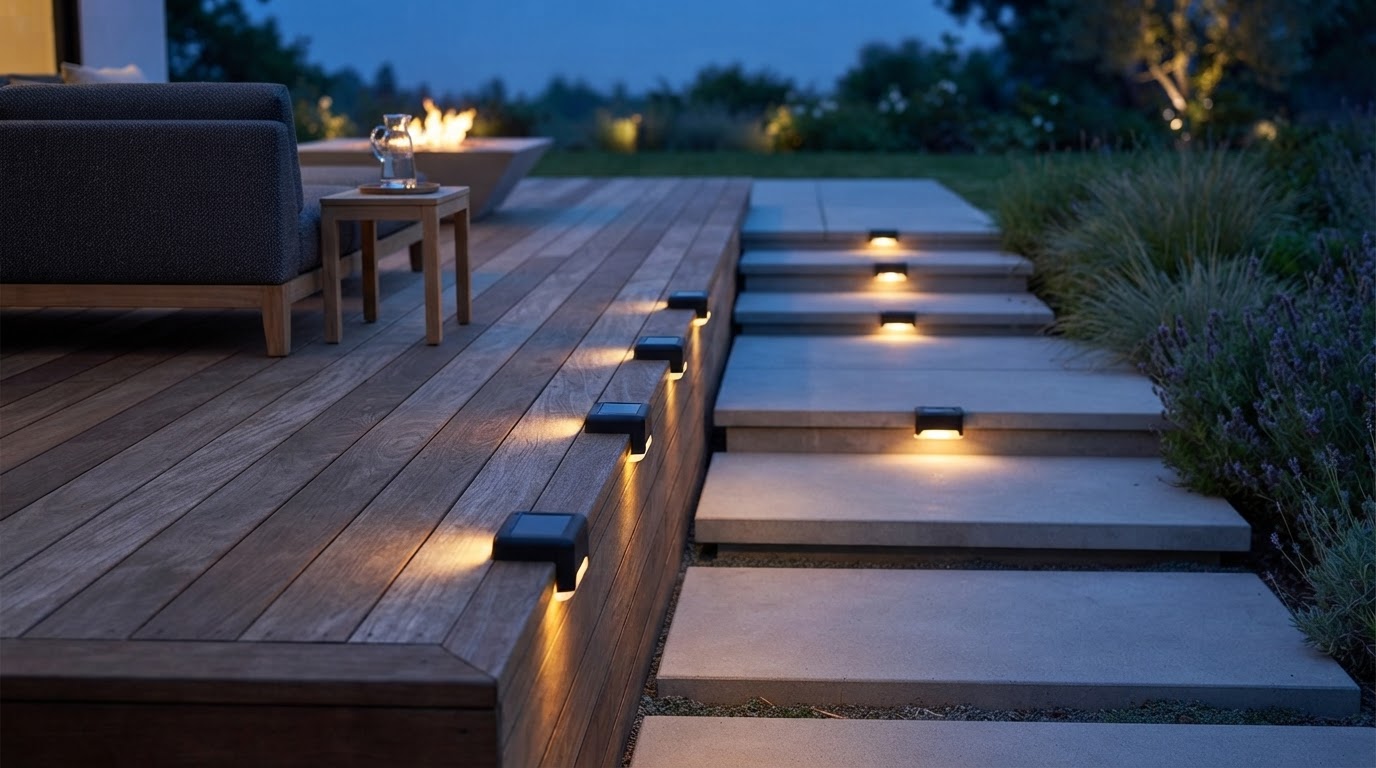
Solar Powered Deck Lights for Minimalist Outdoor Design
 Daniel OkaforField Tester
September 16, 2026. This evaluation explores how minimalist solar hardware integrates with modern architectural styles without the visual clutter of traditional wiring. It is written for homeowners seeking a low-profile aesthetic that prioritizes clean lines and structural integrity.
The Challenge of Integrating Lighting into Modern Architecture
When I first started installing exterior fixtures, I found that traditional lighting often competes with the architecture rather than complementing it. Modern deck designs rely on slim profiles—think cable railings, glass panels, and hidden fasteners. Introducing bulky, wired fixtures often ruins the very simplicity the homeowner paid a premium for. According to MOD LIGHTING, modern solar lights are specifically characterized by their sleek, minimalist designs, which allow them to serve as energy-efficient upgrades for modern exteriors without the intrusive footprint of older models. I tested this for several weeks on a site featuring matte black powder-coated steel railings. The primary friction point in these environments is the 'visual noise' created by large solar panels or protruding housings. In many cases, a standard fixture feels like an afterthought. What I noticed during the initial layout was that finding a balance between sufficient lumen output and a discrete form factor is where most products fail. If the light is too small, it doesn't provide the safety required for high-traffic areas; if it's too large, it breaks the horizontal plane of the deck railing. This is particularly problematic when you are trying to maintain the specific aesthetic required for enhancing curb appeal with solar powered deck lights, where the fixture must look intentional from both the street and the seating area.
Performance and Integration of Solar Powered Deck Lights
Here's the moment it earned its place: I installed a series of low-profile Solar Powered Deck Lights along a set of dark composite stairs during a week of heavy, intermittent rain. Day three is where I noticed the difference in build quality. While cheaper plastic units often fog up or lose their seal, these units maintained a clear throw of light across the tread. The search volume for solar step lights outdoor suggests a high demand for these safety features, but the real test is how they handle moisture ingress over time. What surprised me was the consistency of the internal battery capacity. Even after a day of overcast skies, the discharge rate was controlled enough to provide visibility until well past midnight. I specifically looked at how these units attach to railings to see if the mounting hardware compromised the minimalist look. The integration was seamless because the housing sat flush against the post, mimicking the geometry of the deck itself. Unlike traditional bulky lanterns, these units use high-efficiency monocrystalline cells that require less surface area, allowing the fixture to remain thin. When choosing post cap solutions, I found that the most effective minimalist setups are those that disappear into the structure during the day. By using solar cap lights for deck posts, you eliminate the need for vertical wiring runs that typically clutter the view of the backyard. For those managing a larger perimeter, utilizing solar post cap lights 4x4 ensures that the lighting follows the natural rhythm of the structural posts, maintaining a clean, architectural cadence.
A Framework for Selecting Minimalist Solar Hardware
Selecting the right fixture involves more than just looking at a photo online; you have to consider the tactile quality and the light temperature. What I'd do differently next time is pay closer attention to the Kelvin rating of the LEDs. In a minimalist setting, a cool blue light can feel clinical and harsh against natural wood or stone. I prefer a warmer 3000K glow that highlights the texture of the materials. According to Backyard Boss, contemporary lights and LED deck step lights are among the best ideas for modernizing a space, particularly when they are used as accent pieces rather than primary floodlighting. When you are finalizing your layout, use this framework to ensure the hardware aligns with a minimalist philosophy:
- Prioritize flush-mount or recessed housings to minimize the physical footprint on railings and stairs.
- Verify the IP65 or higher waterproof rating to ensure the internal circuitry survives seasonal expansion and contraction.
- Match the fixture finish (matte black, brushed aluminum, or bronze) to your existing railing hardware to create a unified look.
- Select monocrystalline solar panels for better energy conversion in smaller form factors.
- Opt for integrated sensors that trigger 'dusk-to-dawn' operation to avoid the need for manual switches.
- Test the light spread to ensure it illuminates the walking surface without creating upward glare that obscures the stars.
Sources
- Buy Solar Deck Lights | Solar Post Caps - The Deck Store
- Choosing Between Modern and Traditional Style Solar Lights for ...
- Outdoor Solar Lights | MOD LIGHTING