
Screw-In vs. 3M Adhesive Solar Step Lights: Which Mounting Option Is Best for Your Deck Stairs?
On deck stairs, screw-in mounts are usually best on wood risers that take a small fastener and absorb years of foot-traffic vibration. 3M adhesive is best on clean, dry, smooth vertical faces that cannot be drilled — many composite risers and finished skins. Both screws and 3M can mount solar step lights vertically or flat. The stair-specific problem is a vertical plane under tread runoff, not a quiet rail cap. Charge 4–5 hours in sun before the first night walk.
Stairs are a different mount than a deck rail
A rail cap sits still. A stair riser takes a downward load every time someone lands on the tread above it. That vibration is why screw-in versus 3M is not the same comparison as a fascia board. Mechanical fasteners bite wood and stay through slam-the-door traffic. Adhesive stays if the film was clean, dry, and fully set before the first storm and the first running child.
Vertical is the usual stair plane. The panel and the lamp share that face. Screws and 3M both allow vertical mounts. A flat mount on the tread itself is a trip and a wear path; keep hardware on the riser or a side stringer, not on the walking surface.
Warm white glow should hit the tread, not the walker's eyes. A mount that cocks upward from a peeled 3M corner or an over-driven screw becomes a glare problem as well as a hardware problem.
When screw-in step lights are the better stair choice
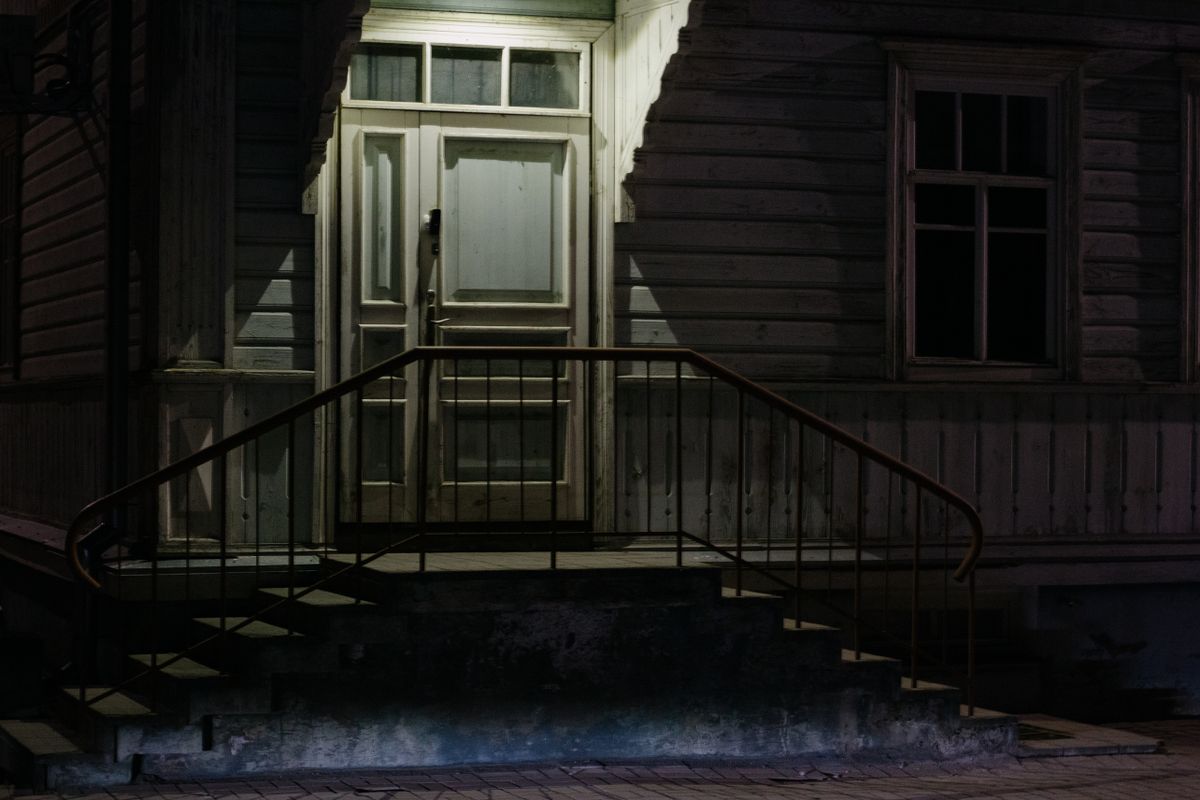
Photo by Plato Terentev on Pexels
Closed wood risers that already take trim screws are the home field for screw-in mounts. Predrill if the board splits. Snug the ABS housing; do not crank until it warps. Keep the panel plane in the sun after the screw seats. A unit hidden under a deep nosing may mark the tread and still starve the charge.
Open-riser stairs with only a stringer may still take a screw on the side plane if that plane sees sky. Do not invent a mount on a thin decorative spindle.
Screws leave holes. That is the trade for vibration resistance on a primary flight. Patch later if the layout changes.
When 3M adhesive is the better stair choice
Composite or capped risers with a no-penetration rule lean 3M. So do rental stairs and painted skins the owner does not want drilled. The face must be clean, dry, and smooth. Wipe dust, pollen, and loose sealer. Press firmly. Give the adhesive a full set on a dry day before tread runoff from the first rain tests the film.
Vertical glue is less forgiving than a flat cap. Gravity and water sheets work on the bond all season. If the riser is peeling, chalky, or constantly damp in a shaded well, adhesive is the wrong tool even if drilling is forbidden — fix the surface or pick another plane.
Charge and dark-test before sticking. Pull the insulator tab, sun 4–5 hours, confirm glow. Repositioning cured 3M on a stair is messy; do the aim right once.
Screw-in vs 3M on deck stairs only
| Stair factor | Screw-in | 3M adhesive | | --- | --- | --- | | Foot-traffic vibration | Usually the stronger hold on wood | Needs a fully cured, clean film | | Vertical riser face | Yes | Yes, on smooth dry skin | | Tread runoff after rain | Holes need sound wood, not rot | Cure before the first wet week | | Composite no-drill riser | Often not allowed | Typical match | | Reposition after a walk test | Unscrew and patch | Hard once cured | | Glare risk if the mount shifts | Cocked screw aims the lamp up | Peeled corner aims the lamp up |
Charge and dusk-to-dawn still beat the hardware debate
A perfect screw pattern on a shaded riser still fails at night. Site the panel for 4–5 hours of sun so 6–8 hour runtimes cover the last trip down. Automatic dusk-to-dawn means there is no switch at the door to forget — important on stairs more than on a decorative rail.
ABS handles rain, snow, and wind once mounted. It does not keep a dirty vertical panel charging. Wipe the face. Brush snow. The mount debate is wasted if the cell never banks.
Mixed flights can use screws on wood risers and 3M on a composite landing skirt. Match the surface, not a single rule for the whole stair.
Deck-stair mount decision checklist
Photo by cottonbro studio on Pexels
- Keep hardware off the walking tread.
- Prefer screws on wood risers with nightly traffic.
- Prefer 3M on clean, dry, no-drill vertical faces.
- Predrill split-prone wood; do not warp the ABS.
- Cure adhesive on a dry day before runoff tests it.
- Pull tabs, charge 4–5 hours, dark-test, then mount.
- Walk the stairs at dusk and fix cocked aim.
Frequently asked questions
Can 3M hold a solar step light on a vertical riser?
Yes on a clean, dry, smooth face after a full cure. Vertical glue plus tread runoff is why prep matters more than on a rail cap.
Do screws split stair risers?
They can on thin or old boards. Predrill and snug. Do not treat ABS like a lag-bolt job.
Which mount is better for kids running the stairs?
Screws on sound wood handle vibration more predictably. Adhesive can work if it was cured before that traffic.
Should step lights sit on the tread?
No. Treads are for feet. Use the riser or a side plane with the panel in sun.
Is the hardware choice the same as on a deck rail?
No. Stairs add vibration and vertical runoff. Use this comparison, not a rail-cap rule of thumb.
Related reading
These published install pages cover screws, 3M, and stair mounting next to this step-light comparison.
- how to install solar stair lights using screws or 3M adhesive
- 3M outdoor adhesive tape versus screw mounting
- how solar powered deck lights install on stairs
- how to install solar deck lights without electrician fees
What to do next
Stand on the flight and name each riser: wood that takes a screw, or a no-drill skin that needs 3M. Pull the insulator tabs, charge 4–5 hours in sun, and dark-test. Mount on the riser — not the tread — vertical so warm white hits the step. Walk it at dusk. That is the stair-specific hardware choice.
Cover photo by Erik Mclean on Pexels.