
Solar Deck Lights vs. Hardwired Perimeter Lighting: Which Is Right for Your Pathways?
Solar deck lights are right for pathways that have no buried cable and need warm white markers after dark. Hardwired perimeter lighting is right when a transformer, trench, and switch already exist or when a long, even run must stay on a house circuit. Solar units pull an insulator tab, take a 4-5 hour sun charge, run 6-8 hours, and turn on at dusk with no path switch. They mount with screws or 3M adhesive on a fence, wall, or path edge. They do not replace a paid-for wired run that already marks the walk.
The pathway question is cable, not catalog brightness
A path comparison that starts with a product photo misses the expensive part. Hardwired perimeter lighting is a trench, a transformer, wet-location boxes, and often a permit. Solar skips that path. The fixture charges from its own panel, so it never appears on the electric bill and never needs a homerun under the pavers. If the walk is a rental side yard, a new garden loop, or a fence line that never got cable, solar is the practical fit. If the front walk already has low-voltage pucks and a working transformer, ripping them out is usually a loss. Add solar where cable never went.
How each system behaves on a night walk
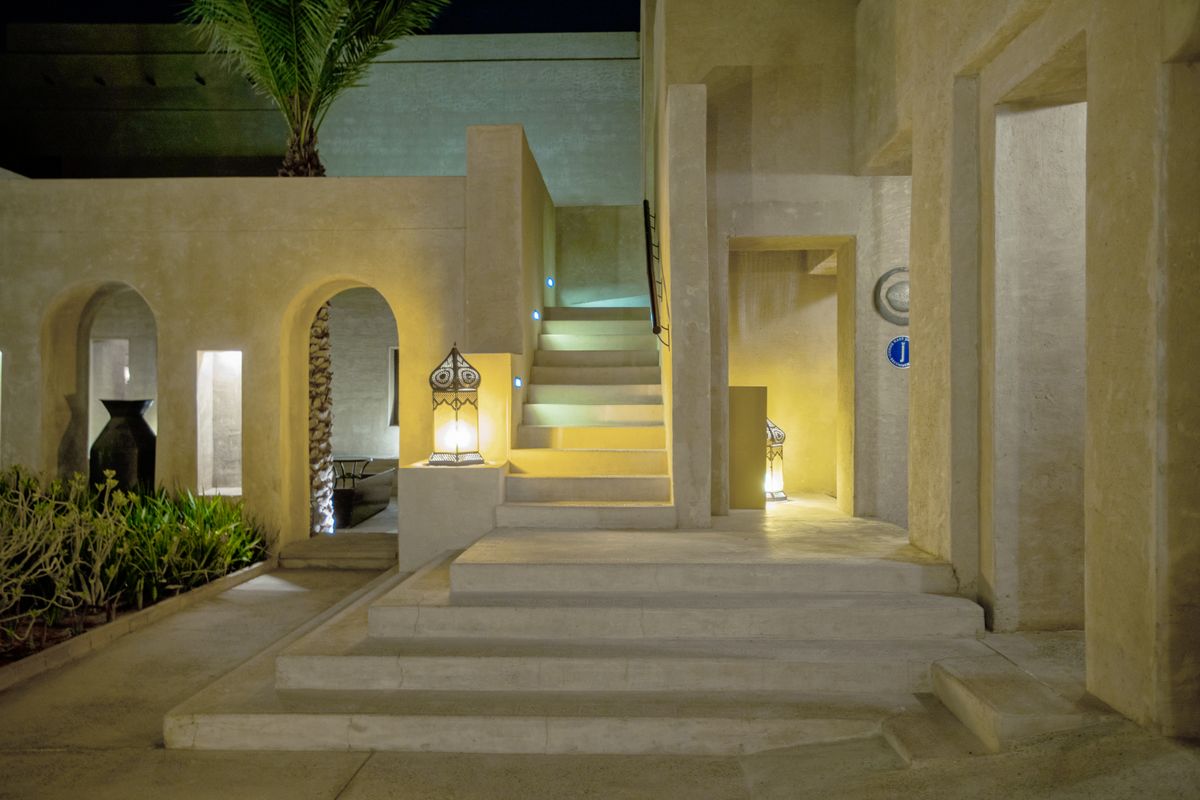
Photo by Denys Gromov on Pexels
Solar path markers turn on at dusk and off at dawn. There is no switch to forget at the back door. Guests walking a dark side path get light because the sensor saw dusk, not because someone remembered a timer. Runtime of 6-8 hours covers a typical evening; cloudy weeks and shaded panels shorten the bank.
Hardwired perimeter lighting can run all night from the house, including after a string of gray days. That is the wired advantage on a long driveway. The cost is that a tripped GFCI, a dead transformer, or a forgotten switch still blacks the whole run. Solar fails per fixture: one dirty panel does not kill the rest of the fence line.
Warm white that is not dazzling is the solar color for strolling. A hardwired flood can still glare if it aims at faces. Either system is only as path-safe as its aim.
Install labor on a path versus a deck stair
On a pathway, the labor gap is larger than on a deck stair. Trenching pavers or turf for low-voltage cable is a weekend plus a transformer location. Solar mounts on the fence face, an outdoor wall, a garage plane, or a path-edge board with screws or 3M adhesive, vertical or flat. Sun is the solar constraint. A north fence under trees will not take a 4-5 hour charge, so the 6-8 hour night claim does not apply. Hardwired does not care about the tree; it cares about the trench. Snow on an ABS panel is a wipe, not a reason to bury cable.
Solar path markers versus hardwired perimeter runs
| Factor | Solar deck / path lights | Hardwired perimeter lighting | | --- | --- | --- | | Power after install | $0 household draw | Nightly watts plus transformer | | Path construction | No trench | Cable under pavers or turf | | Night operation | Auto on at dusk, off at dawn | Switch, timer, or always-on circuit | | First-day setup | Pull tab, 4-5 hour sun charge | Circuit live before the first test | | Add a new loop later | One more self-charged unit | Extend cable and load | | Shade or snow on panel | Shorter 6-8 hour runtime | Unaffected if the circuit is up |
When to mix, and when not to
A working wired front walk can stay. Solar then covers the unlit side path, the garden loop, and the fence gate that never got a puck. Mixing is a layout choice, not a wiring splice. Do not aim a hardwired flood down the same walk that already has warm solar markers. Count trip points and place a marker at each one. Pull every insulator tab before the first charge day; a boxed fixture with the strip in place never enters service.
Pathway decision checklist
- Map the walk and note whether cable already exists under it.
- Leave working hardwired runs in place; add solar where there is no trench.
- Site solar panels for 4-5 hours of sun along the fence or wall.
- Choose warm white markers aimed at the walking surface.
- Plan screws or 3M adhesive; neither needs a path circuit.
- Pull insulator tabs and finish a dark-environment test after charging.
- Do not skip the middle of a long path to stretch a pack.
Frequently asked questions
Can solar deck lights replace a whole perimeter circuit?
They can mark a path that never had cable. They should not rip out a working wired run that already lights the walk.
Which option is better for a rental side path?
Solar. There is no trench, no electrician, and 3M adhesive can avoid new holes if the lease requires it.
Do solar path lights stay on all night like hardwired ones?
They are built for 6-8 hours after a 4-5 hour sun charge. Shorter winter days and dirty panels cut that bank. Hardwired can run as long as the circuit is live.
Is a switch an advantage on a path?
Usually not. A forgotten switch leaves the walk black. Dusk-to-dawn solar turns on when people actually use the path.
What if the fence is fully shaded?
Solar will not finish a 4-5 hour charge there. Move the mount to a sunny wall or keep a wired run for that stretch.
Related reading
These published comparisons separate deck-stair wiring from the pathway trench question on this page.
- solar deck lights versus hardwired step lighting
- solar versus hardwired stair lights comparison
- solar deck lighting cost-efficiency notes
- installing solar deck lights without an electrician
What to do next
Walk the pathway after dark and ask whether the alternative is a trench or a dark edge. If there is no cable, pull insulator tabs, charge panels in open sun for 4-5 hours, and mount warm white solar markers on the fence or wall that sees sky. Leave a working hardwired run in place. That is the pathway split: solar where cable never went, wired where it already earns its keep.
Cover photo by Erik Mclean on Pexels.