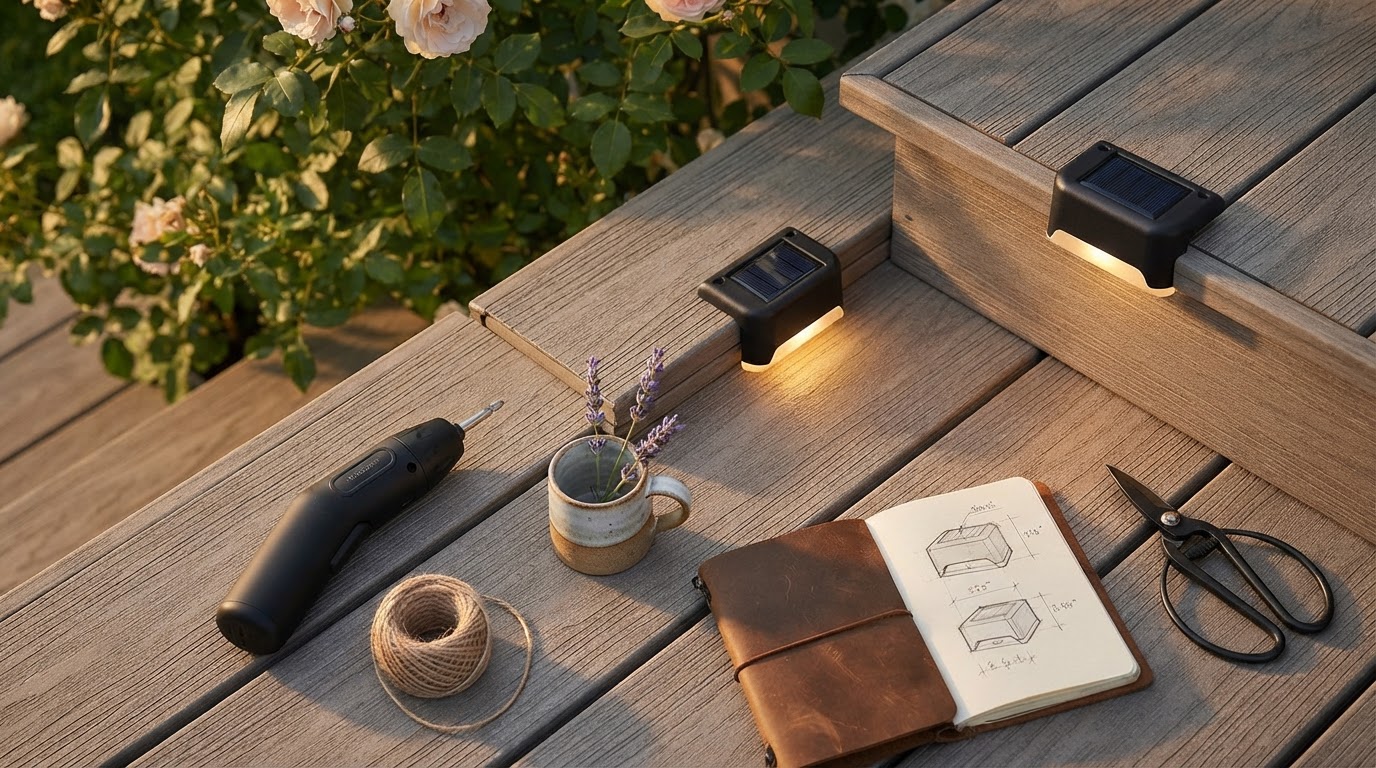
Solar Powered Deck Lights for Composite Surfaces
 Priya RamanSenior Analyst
September 18, 2026. This analysis explores the technical requirements for integrating Solar Powered Deck Lights with modern composite decking materials. It is intended for homeowners and contractors seeking to enhance outdoor living spaces without compromising the structural integrity of synthetic boards.
Selecting the right illumination for a synthetic deck requires understanding a matrix of three critical factors: heat dissipation, mounting depth, and light temperature. Unlike traditional timber, composite materials like Trex or TimberTech have specific thermal expansion properties that dictate how hardware should be installed. When evaluating your space, two axes matter here: the functional need for safety and the aesthetic need for ambiance. By mapping your deck layout against these requirements, you can ensure a seamless installation that preserves your warranty while providing reliable night-time visibility.
The Challenges of Lighting Synthetic Decking
Composite decking presents a unique set of challenges compared to natural wood, primarily due to its density and the way it reacts to temperature fluctuations. Because these boards are often made from a blend of recycled plastic and wood fibers, they do not hold screws in the same way as pressure-treated pine. Standard high-voltage lighting often requires complex routing and drilling that can weaken the board structure or void manufacturer warranties. According to DecksDirect, solar lights usually operate on a photocell that automatically senses ambient light and turns your deck lights on at night, eliminating the need for manual switches and heavy-duty electrical infrastructure that typically requires invasive drilling.
The density of composite boards also means that heat management is paramount. Traditional halogen bulbs generate significant heat that can warp or discolor synthetic surfaces over time. This makes the transition to LED-based Solar Powered Deck Lights a technical necessity rather than just an energy-saving choice. Furthermore, moisture management is a concern for any outdoor installation; ensuring you use waterproof solar deck lighting prevents internal corrosion and staining of the deck surface from battery leaks. In regions with significant seasonal changes, the performance of these units must also be weighed against light availability, particularly when considering solar deck lights for dark winter days where charging cycles are significantly shortened.
Integrating Solar Powered Deck Lights with Composite Material
To address the specific needs of composite surfaces, Solar Powered Deck Lights utilize integrated photovoltaic cells and low-profile mounting systems. These units, such as the VOLT Solar Integrated LED Deck Light, are often constructed from durable ABS plastic or powder-coated aluminum, emitting a controlled 30 lumens of 2700K warm white light. This specific light temperature is crucial for composite decks, as it complements the earthy tones of the boards without creating the harsh, blue-tinted glare often associated with lower-quality solar products. Think of it as a matrix of light output versus run time; a 30-lumen output typically provides 5-6 hours of illumination on a full charge, which is the optimal balance for most residential applications.
For those with composite railings, solar post caps offer a non-invasive alternative to surface-mounted step lights. As noted by The Deck Store, solar post caps are an easy way to add lighting to any deck railing with no wiring necessary. These caps fit directly over 4x4 or 6x6 composite posts, utilizing the existing structure as a mount. This is particularly effective for bright solar lights for wooden deck conversions where the user is upgrading to composite and wants to maintain a high level of brightness. The installation process for these units typically involves only two small pilot holes, significantly reducing the risk of board splitting compared to traditional wired systems. Once you see it this way—as a modular addition rather than a structural modification—the long-term maintenance of the deck becomes much simpler.
Technical Framework for Selection and Installation
When finalizing a lighting plan for a composite deck, the decision rule is to prioritize surface-safe mounting and battery longevity. Unlike natural wood, composite does not "heal" from misplaced holes, making the initial placement critical. You should evaluate the placement based on foot traffic patterns and the proximity to stairs, where solar step lights outdoor usage is highest. Pinterest resources from DecksDirect suggest that a soft glow is often more effective for safety than high-intensity floodlighting, as it preserves night vision and avoids light pollution.
Before purchasing your Solar Powered Deck Lights, verify the following technical specifications to ensure compatibility with your specific brand of composite decking:
- Verify the base dimensions of post caps to ensure they match the outside diameter of your composite sleeves (standard 4x4 sleeves are often 4.5 inches).
- Select units with a minimum IP65 waterproof rating to protect the composite surface from moisture trapped beneath the light housing.
- Choose LEDs in the 2700K to 3000K range to avoid the "artificial" look that clashes with synthetic wood grains.
- Opt for models with replaceable Lithium-Phosphate (LiFePO4) batteries for better performance in varying temperatures.
- Check for non-corrosive mounting hardware, specifically stainless steel, to prevent rust streaks on your deck boards.
Shop Solar Powered Deck Lights here