Sunlight Optimization Guide: How to Angle and Position Solar Deck Lights for Max Runtime
Maximum night runtime on solar deck lights comes from angling the solar panel at open sky long enough to finish a 4–5 hour charge, then aiming the lamp at the walking surface. A full charge is what funds 6–8 hours after dusk. Shade, a low winter sun behind an eave, or a panel that stares at a neighboring fence will shorten the night even when the fixture is otherwise fine. Position is two aims: sky for the cell, tread for the glow.
Runtime is won at noon, not at dusk
People judge placement after dark, when the lamp either lasts or dies. The decision that mattered happened while the sun was up. A unit that never completes 4–5 hours of real sun cannot invent a 6–8 hour night. Walk the deck at midday and at mid-afternoon. Note which risers, caps, and rails actually see sky, not which ones look pretty from the kitchen.
Angle means the panel face, not a decorative tilt for the photo. Lay the cell as square to the sun path as the mount allows. Flat on a cap works when that cap is not under a roof. Vertical on a south- or west-facing riser works when that wall is the sunny plane. North walls and deep soffits are poor runtime sites even if the stair needs light.
Pull the insulator tab before any optimization. A unit still isolated in the box does not charge, so angling it is theater.
Two planes: the cell and the lamp
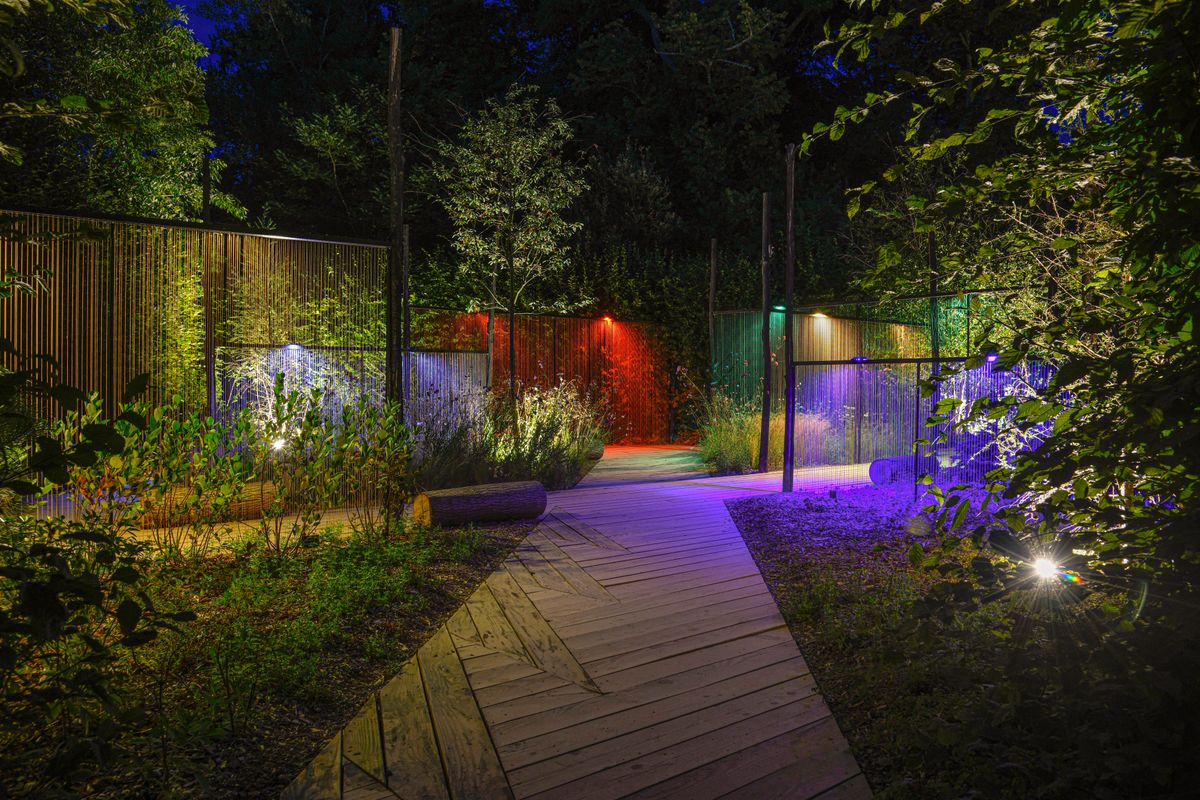
Photo by Thierry coulon on Pexels
Max runtime fails when the lamp is aimed well and the cell is not. A riser mount that paints the nosing with warm white can still starve if the panel looks into the tread above it or into a closed stringer. Shift to the adjacent face that sees sky, or use a flat cap mount if that cap is the sunny plane and the glow still marks the step.
Screws and 3M adhesive both allow vertical or flat mounting. Hardware is not the optimizer. The optimizer is which plane gets the cell. A stick-on unit on a shaded rail has the same short night as a screw-in unit on that same rail.
Warm white that is not dazzling should still hit the board, not neighboring windows. Runtime and glare are separate knobs. Do not rotate a lamp into eyes to catch one more hour of sun on the back of the housing. Find a different board.
Angles and positions that fund 6–8 hour nights
| Placement | Runtime outlook | Use it when | | --- | --- | --- | | Flat cap in open sky | Best charge window | The cap is not under an eave | | Vertical south or west riser | Strong afternoon charge | That face is the sunny wall | | Vertical north wall | Weak bank | Only if no other plane exists | | Under a deep roof | Charge often fails | Not for max runtime | | Behind a dense shrub | Short or zero night | Trim or move the mount | | Snow or pollen on the face | Stolen 4–5 hour window | Wipe, then recheck nights |
Seasons change the sun angle, not the product spec
June sun is high. January sun is low and brief. A rail that charged easily in summer can sit in eave shadow all winter. Max runtime in the cold months means walking the sun path again, not buying a different lumen number that was never specified. Move units to the remaining sunny faces. Keep snow off the panel so the shorter day is not also a dirty day.
Cloudy stretches cut the bank. That is a weather budget. ABS housings stay through rain, snow, and wind; they do not create photons. Wipe the face after storms. A film of pollen in spring is a surprisingly effective shade cloth.
If part of the stair never sees 4–5 hours of sun, do not pretend that location will match the 6–8 hour figure. Light the sunny walking line. Treat a permanent cave as a separate decision instead of a reason to abandon the rest of the deck.
Sun-angle checklist for maximum runtime
Photo by Lorenza Magnaghi on Pexels
- Pull insulator tabs so units can actually charge while you site them.
- Walk the deck at midday and mid-afternoon; mark faces that see open sky.
- Put the panel on the sunny plane, vertical or flat, even if that is not the prettiest board.
- Aim the lamp at the tread or rail, not at eyes or windows.
- Recheck eave shade in winter when the sun sits lower.
- Wipe pollen, leaves, and snow off the panel so the 4–5 hour window is real.
- Do not expect a shaded cave to deliver a 6–8 hour night.
Frequently asked questions
Does a steeper panel angle always mean more runtime?
Only if that angle points at the sun path. A steep face into a fence is worse than a flat cap in open sky. Sky access beats a dramatic tilt.
Can lights be angled after 3M adhesive is on?
Small aiming is possible before the pad fully sets. A big move later usually means a new clean, dry stick or a switch to screws on that board.
Why do nights get shorter in fall if the lights are the same?
The sun window shrinks and eaves throw longer shadows. The 6–8 hour figure is a full-charge night, not a promise in every season.
Should every stair riser get a light even in shade?
Mark height changes for safety, but only on faces that can charge, or accept a shorter bank on the shaded step. A dark unit is not a marker.
Is indoor charging on a windowsill a valid angle trick?
The listed charge is sun on the panel for 4–5 hours. Glass, screens, and indoor lamps are not that window. Use outdoor sky.
Related reading
These published guides cover step placement, stair layout, and why solar belongs on outdoor steps so runtime stays tied to sun, not to a switch.
- strategic placement spots for solar outdoor step lights
- solar deck stair lights layout for glare-free safety
- why choose solar powered deck lights for outdoor steps
- how to light outdoor stairs safely at night
What to do next
Walk the deck while the sun is up and mark every plane that can finish a 4–5 hour charge. Pull insulator tabs, set panels on those faces, and aim warm white at the treads. Recheck the same walk in winter shade so 6–8 hour nights stay the goal instead of a summer-only accident.
Cover photo by Aleksandr Firstov on Pexels.