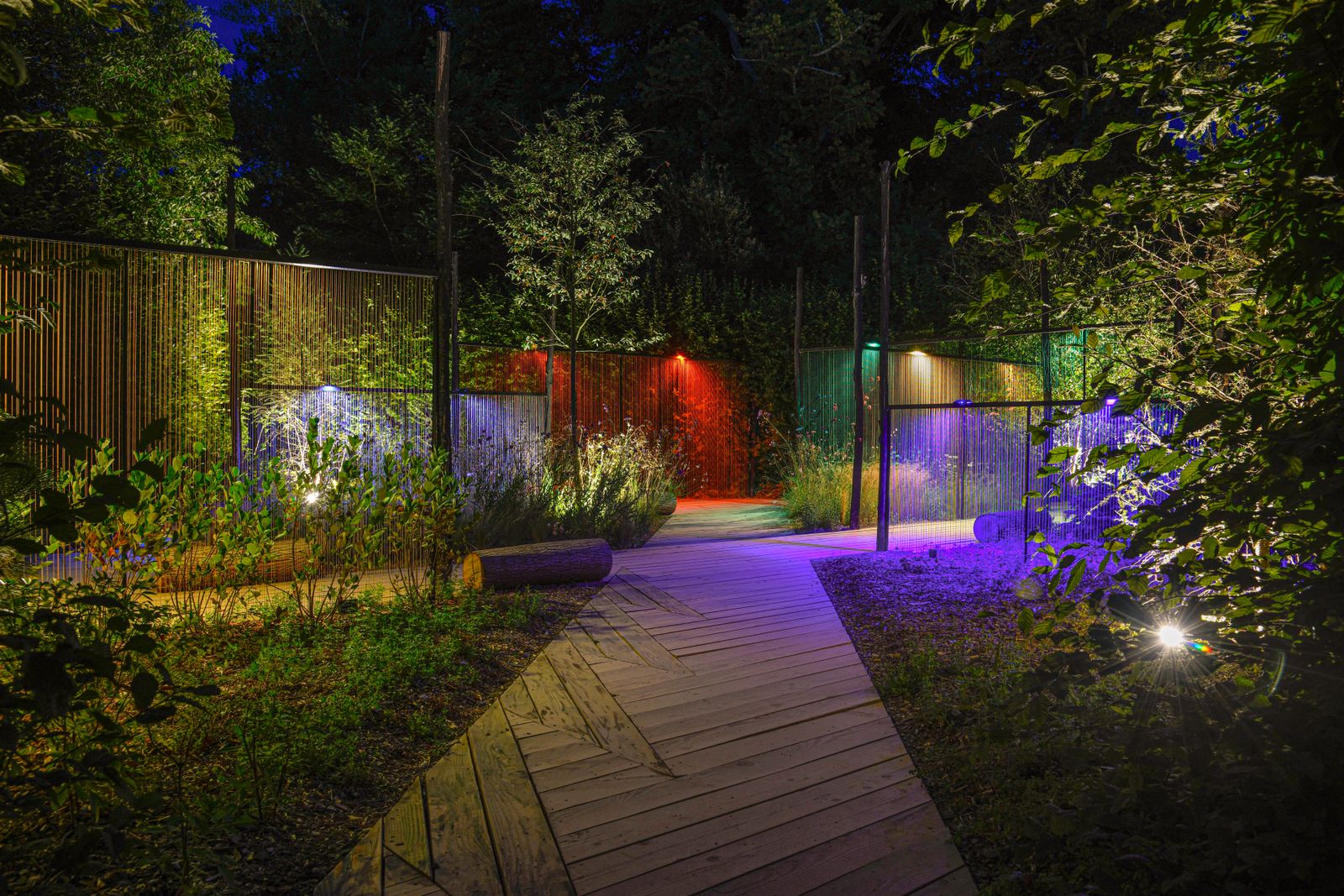
How to Choose the Best Solar Perimeter Fence Lights for Your Yard
Choose solar perimeter fence lights by mapping the yard edge people actually walk: the gate, the corners, and any step or path that follows the fence. Buy warm white markers that are not dazzling, that charge in 4–5 hours of sun, run 6–8 hours after dusk, and mount with screws or 3M adhesive on a vertical or flat plane that still sees sky. Skip a single blazing post light that leaves the rest of the boundary black. Perimeter safety is an even line, not a spotlight on one board.
Define the perimeter job before the pack size
A yard perimeter is a loop or a run: fence, gate, side path, maybe a deck that meets the fence. The best buy lights the walking strip along that edge and the places a foot or a hinge changes the route. Front door, back yard, driveway, garage, outdoor walls, gardens, and paths are all listed uses for this style of solar outdoor light. The fence is one more fixable plane in that list when the panel can see sun.
Do not start with a count copied from a deck stair. Stairs need a marker per height change. A fence needs a repeating interval the eye can follow in the dark, plus extra attention at the gate and at corners where people turn. Under-lighting the gate to dress a far post is a poor choice.
Warm white without dazzling is the color filter. Cool floods on a fence line wash neighbors and hide the path behind glare. Perimeter lighting is a courtesy to the household walk, not a stadium wash of the lot.
Filters that belong on a fence-light shortlist
Photo by Plato Terentev on Pexels
Automatic dusk-to-dawn matters on a boundary because nobody wants a switch at the far gate. These solar lights have no switch: pull the insulator tab, charge 4–5 hours, and they turn on at dusk. That is the buying feature that keeps the perimeter on when people come home.
Mounting flexibility is the second filter. Screws suit wood posts and rails that will stay. 3M adhesive suits clean, dry, smooth faces when drilling a vinyl or finished plane is unwelcome. Both can sit vertical or flat. A fence that cannot offer a fixable, sunny face is a bad candidate, no matter how nice the listing looks.
Outdoor ABS that withstands wind, snow, and rain is the body. This guide will not invent an ingress number. If the housing is indoor plastic, it is not a perimeter product. Wipeable panels matter more on a fence than on a porch because pollen and leaves collect along the lot line.
Buying filters for a solar fence perimeter
| Filter | Pass | Fail | | --- | --- | --- | | Layout | Gate, corners, and even intervals | One lamp on the prettiest post | | Color | Warm white, not dazzling | Cool flood aimed at the neighbor | | Control | Auto dusk-to-dawn after tab pull | Manual switch at a distant door | | Sun | Each panel can take 4–5 hours | Full run sits under dense trees | | Mount | Screws or 3M on a fixable plane | Nothing to attach to, or wet peeling paint | | Body | Outdoor ABS for rain, snow, wind | Indoor plastic on a fence |
Where solar perimeter lights are the wrong buy
A fence under a solid tree tunnel will not finish a 4–5 hour charge. Then 6–8 hour nights become a rumor. Either trim, move mounts to the sunny bays, or treat that run as a different project. Do not buy more units to light a cave that cannot charge.
A boundary that already has working hardwired accents does not need a rip-out to count as a good choice. Add solar where cable never went: a rental fence, a new gate, a garden side that stayed dark. Choice is coverage, not loyalty to one power source.
Do not choose by invented lumen charts or pack prices that are not specified here. Choose by whether the walking edge will be marked, whether the glow is warm, and whether each panel sees sky. That is the honest shortlist for this product.
Perimeter fence light buying checklist
Photo by Erik Mclean on Pexels
- Walk the fence at dusk and mark gate, corners, and dark path stretches.
- Require warm white that is not dazzling along the whole run.
- Confirm each candidate face can see 4–5 hours of sun.
- Plan screws on lasting wood or 3M adhesive on clean, dry, smooth faces.
- Budget dusk-to-dawn operation so the far gate is not a switch hunt.
- Keep outdoor ABS as the weather body; skip indoor plastic.
- Do not steal coverage from the gate to decorate a single post.
Frequently asked questions
Are solar deck lights usable as perimeter fence lights?
They can be if the fence plane can be fixed and the panel sees sun. Listed uses already include paths, gardens, yards, and outdoor walls. The perimeter is that same job on a longer line.
How many lights does a typical backyard fence need?
Enough for a repeating interval plus the gate and corners. Count walking dark spots at dusk rather than copying a stair pack size.
Should fence lights be brighter than stair lights?
Not for this product. Warm white that is not dazzling is the specified glow on stairs and on the yard edge. Even markers beat a harsher fence flood.
Is adhesive enough on a vinyl fence?
Only on a clean, dry, smooth face. If the vinyl is chalky or the spot sees hits from gates and bags, screws on a wood post or another fixable plane are the better buy decision.
Do perimeter lights need a first charge like deck lights?
Yes. Pull the insulator tab and finish 4–5 hours of sun before judging the pack. A dark fence on night one is usually activation, not a bad choice of model.
Related reading
These published guides cover buying a warm patio layout, pack sizing, and solar versus hardwired so a fence perimeter is not guessed in isolation.
- solar deck lights buying guide for a warm, safe patio
- how many solar deck lights a project actually needs
- comparison of solar versus hardwired deck lights
- glare-free warm white buying notes for night walking
What to do next
Walk the fence at dusk with a notepad. Mark the gate, each corner, and every stretch of path that disappears. Choose warm white solar lights for those faces only if the panel can take a 4–5 hour charge, then pull the tabs and prove the glow before mounting the perimeter.
Cover photo by Thierry coulon on Pexels.